
Selling the State
Privatization, Neoliberal Reform, and Populist Politics in Argentina and Puerto Rico in the 1990s

Read my latest post in TIME: Federal Energy Policy Is Deepening Puerto Rico’s Power Divide
While watching the series Menem on Amazon Prime, which chronicles the presidency of Carlos Saúl Menem in Argentina, I was struck by how the populist and neoliberal policies he pursued echo policies implemented in Puerto Rico under Pedro Rosselló, particularly in their emphasis on the privatization of public institutions.

During the 1990s, many countries in Latin America and the Caribbean adopted neoliberal economic reforms that promoted privatization, deregulation, and the reduction of the role of the state in the economy. These reforms were strongly influenced by the policies associated with the Washington Consensus, which encouraged governments to sell state-owned enterprises, liberalize markets, and attract foreign investment. Two prominent examples of this trend were Argentina under President Carlos Menem and Puerto Rico under Governor Pedro Rosselló.
Although Argentina was a sovereign nation and Puerto Rico is a U.S. territory, both governments implemented similar policies that combined populist rhetoric with aggressive privatization programs. These reforms were often justified as necessary for modernization and economic growth. However, in both cases they also produced significant social and economic consequences, including rising inequality, increased public debt, and widespread social unrest.
Menem, Cavallo, and the neoliberal transformation of Argentina
When Carlos Menem assumed the presidency in 1989, Argentina was facing a severe economic crisis characterized by hyperinflation, declining industrial production, and political instability. Inflation had reached catastrophic levels, exceeding 5,000 percent annually. In response, Menem appointed economist Domingo Cavallo as Minister of Economy to design a stabilization program.
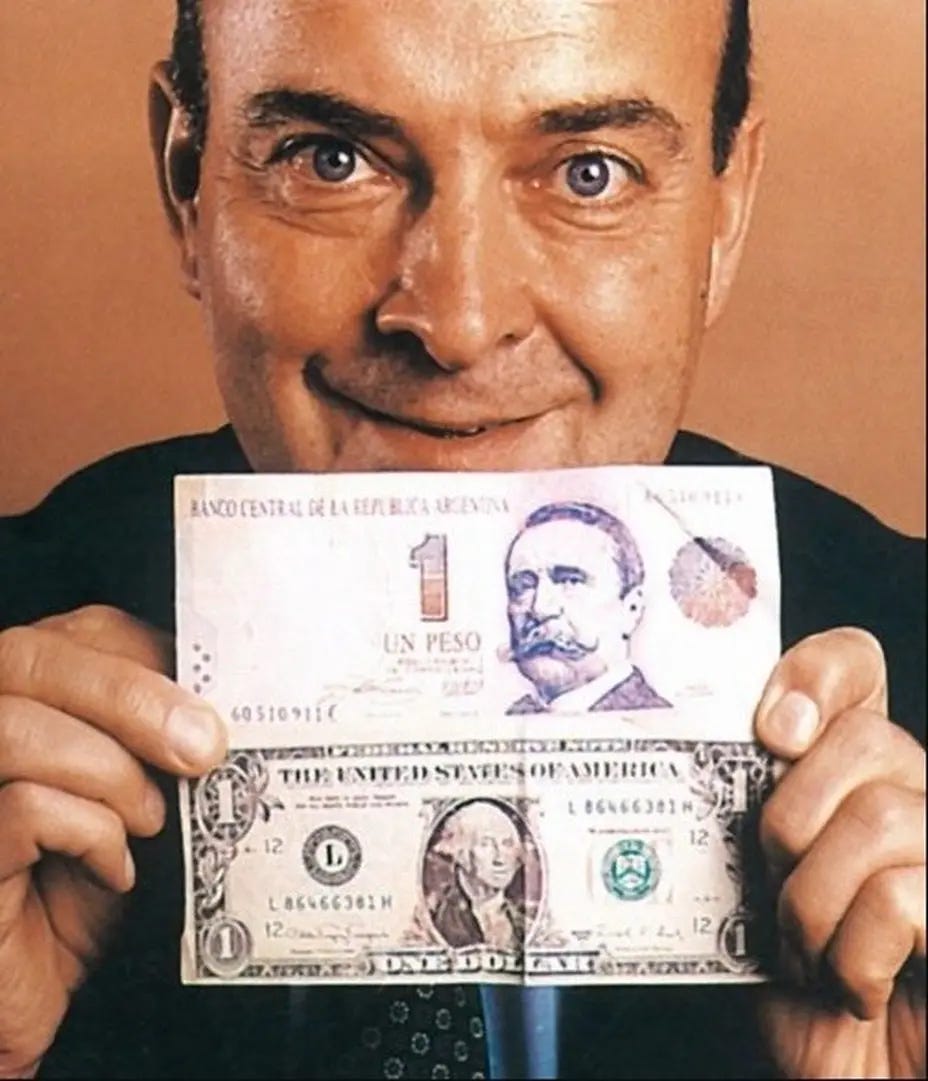
Cavallo’s most important policy initiative was the Convertibility Plan of 1991, which established a fixed exchange rate between the Argentine peso and the U.S. dollar at a one-to-one parity. The policy was intended to restore confidence in the currency and end hyperinflation. In the short term, the plan was successful. Inflation fell dramatically and economic growth resumed during the early 1990s.
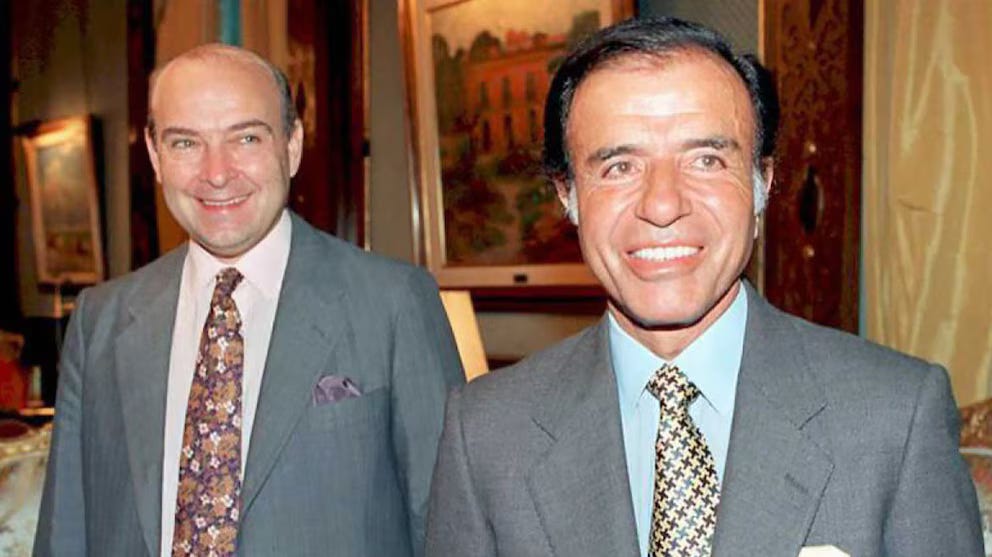
However, the Convertibility Plan was accompanied by a sweeping program of privatization. Menem’s government sold many of Argentina’s largest state-owned enterprises, including the national oil company YPF, the airline Aerolíneas Argentinas, and major telecommunications, electricity, and gas companies. These sales were presented as a way to modernize infrastructure, reduce fiscal deficits, and attract foreign investment.
Menem’s political strategy combined neoliberal economic policies with populist messaging. As a leader of the historically nationalist and labor-oriented Peronist movement, he maintained the symbolic language of social justice and national progress even while implementing market-oriented reforms. This contradiction allowed him to maintain broad political support during the early years of his presidency.
Despite the initial success in controlling inflation, the long-term effects of these policies proved problematic. The fixed exchange rate made the Argentine peso overvalued, making imports cheaper and exports less competitive. This severely weakened domestic industries and contributed to rising unemployment. At the same time, the privatization process did not solve Argentina’s fiscal problems. Public debt continued to increase throughout the decade.
By the late 1990s, Argentina’s economy entered a recession that ultimately culminated in the dramatic financial collapse of 2001. The crisis resulted in mass unemployment, social unrest, and the default on billions of dollars in sovereign debt. Many analysts argue that the privatization policies, reliance on foreign capital, and rigid currency system established during the Menem years contributed significantly to this collapse.
Privatization and economic reform under Pedro Rosselló
While Argentina was undergoing its neoliberal transformation in the 1990s, Puerto Rico experienced a similar wave of privatization under Governor Pedro Rosselló. Elected in 1992, Rosselló promoted a political platform centered on modernization, economic growth, and government reform.
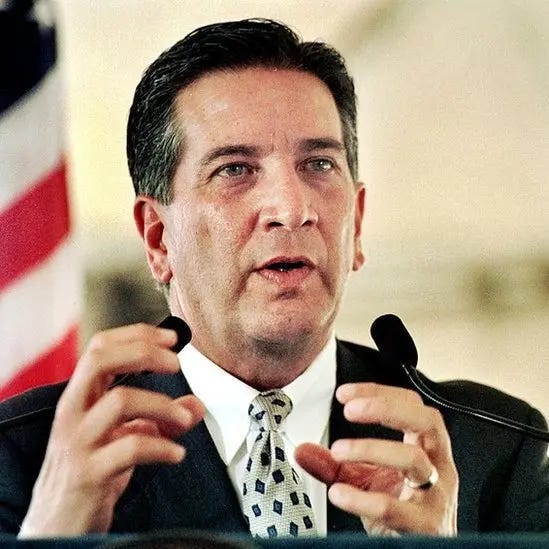
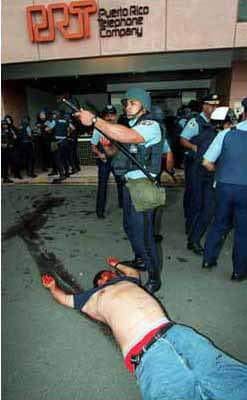
One of the most significant examples was the privatization of the Puerto Rico Telephone Company (PRTC) in 1998. The government sold 51 percent of the company to a consortium led by GTE for approximately $1.9 billion, making it the largest privatization in Puerto Rico’s history at the time. Before its sale, PRTC was one of the island’s most profitable public corporations, generating about $130 million in annual profits in 1996, revenue that supported public programs and government services. Critics argued that the sale sacrificed a stable long-term source of public income in exchange for a one-time payment. The privatization also generated major labor unrest. In June 1998, roughly 6,400 telephone workers participated in strikes and protests, fearing layoffs and restructuring after the transition to private ownership. Supporters claimed the sale would attract investment and modernize telecommunications infrastructure, and the new owners announced plans to invest nearly $1 billion in network upgrades. Nevertheless, the privatization remained controversial because it transferred control of a strategic public asset to private corporations while reducing the government’s long-term fiscal capacity. This process resembled the broader wave of privatizations implemented in Argentina under Carlos Menem during the 1990s, where the sale of state enterprises was justified as modernization but often produced social conflict and long-term economic trade-offs.
Another major reform under Rosselló was the Puerto Rico Health Reform, commonly known as La Reforma, launched in 1993. This policy transformed the island’s healthcare system by shifting services from government-run facilities to private managed care organizations. The government contracted private insurance companies to administer healthcare services for low-income residents through public funding. Public spending on healthcare increased significantly, rising from approximately $1.2 billion in the early 1990s to more than $2 billion by the end of the decade due to the cost of contracts with private insurers. Supporters argued that the reform expanded access to healthcare, particularly for low-income populations who had relied on an underfunded public hospital system. By the late 1990s, the program covered more than 1.3 million residents, nearly one-third of Puerto Rico’s population. Critics, however, argued that the reform created a long-term fiscal burden and increased dependence on private insurance companies while weakening the public healthcare infrastructure.
Like Menem, Rosselló framed these reforms as part of a broader project of economic modernization, emphasizing efficiency, technological progress, and integration into global markets. However, critics argued that these policies transferred public resources to private corporations and weakened the government’s ability to manage essential public services, contributing to Puerto Rico’s continuing structural challenges, including high public debt and economic dependence.
Populist rhetoric and political legitimacy
Despite the different political contexts of Argentina and Puerto Rico, both Menem and Rosselló relied heavily on populist political narratives to legitimize their economic reforms.
Menem presented himself as a charismatic leader capable of rescuing Argentina from economic chaos. His government promoted an image of national renewal and prosperity, even as it implemented policies that dramatically reshaped the country’s economic structure.
Rosselló similarly framed his policies as part of a transformative modernization project. His administration promoted the idea that privatization and market reforms were necessary to bring Puerto Rico into a new era of economic development.
In both cases, populist rhetoric served to build political support for reforms that fundamentally altered the relationship between the state, the market, and society.
Social consequences of privatization
The long-term consequences of these policies reveal important similarities between the two cases.
In Argentina, the neoliberal reforms of the 1990s contributed to growing social inequality and unemployment. Many state-owned industries that had previously provided stable jobs were dismantled or restructured following privatization. When the economic crisis struck in 2001, millions of Argentines fell into poverty, and the political system experienced a profound crisis of legitimacy.
In Puerto Rico, privatization also generated social tensions and labor conflicts. The sale of public corporations reduced the role of the government in key economic sectors and sparked widespread opposition from labor unions and civil society organizations.
Furthermore, privatization did not eliminate Puerto Rico’s fiscal challenges. In subsequent decades, the island accumulated massive public debt, eventually leading to the creation of the federally imposed Financial Oversight and Management Board in 2016 to restructure the territory’s finances.
Conclusion
The experiences of Argentina under Carlos Menem and Puerto Rico under Pedro Rosselló illustrate the broader dynamics of neoliberal reform in Latin America during the 1990s. Both leaders implemented aggressive privatization policies while using populist rhetoric to justify economic restructuring.
Although these policies initially appeared to produce economic modernization and stability, their long-term consequences were far more complex. Privatization often transferred public assets to private interests while weakening the role of the state in providing essential services.
The comparison between these two cases highlights the importance of examining not only the economic goals of privatization but also its social and political impacts.
Bibliography
Associated Press. “Puerto Rico Sells Phone Company to GTE.” The New York Times, June 5, 1998. https://www.nytimes.com/1998/06/05/business/puerto-rico-sells-phone-company-to-gte.html.
Beckerman, Paul. “Public Sector ‘Debt Distress’ and Hyperinflation in Argentina, 1988–89.” Journal of Latin American Studies 24, no. 2 (1992): 349–369.
Bodenheimer, Thomas, and Kevin Grumbach. Understanding Health Policy: A Clinical Approach. 5th ed. New York: McGraw-Hill Education, 2009.
Colón-Ramos, Ángel. “Puerto Rico’s Health Care Reform: A Historical Perspective.” Revista de Administración Pública 35, no. 1 (2003). San Juan: University of Puerto Rico.
Della Paolera, Gerardo, and Alan M. Taylor. Straining at the Anchor: The Argentine Currency Board and the Search for Macroeconomic Stability, 1880–1935. Chicago: University of Chicago Press, 2001.
Duany, Jorge. Puerto Rican Nation on the Move: Identities on the Island and in the United States. Chapel Hill: University of North Carolina Press, 2002.
Frenkel, Roberto, and Martín Rapetti. “A Concise History of Exchange Rate Regimes in Argentina.” CEPAL Review 2010, no. 102 (2010): 31–50.
Mussa, Michael. Argentina and the Fund: From Triumph to Tragedy. Washington, DC: Institute for International Economics, 2002.
NPR. “America’s Shame: Medicaid Funding Slashed in U.S. Territories.” November 20, 2019. https://www.npr.org/sections/health-shots/2019/11/20/780452645/americas-shame-medicaid-funding-slashed-in-u-s-territories.
Pou, Pedro. “Argentina’s Structural Reforms of the 1990s.” Finance & Development (International Monetary Fund), March 2000.
Rivera, José A., and Carlos R. Rodríguez. “Puerto Rico’s Health Care Reform: Cost, Access, and Managed Care.” International Journal of Health Services 31, no. 2 (2001): 321–334.
Stiglitz, Joseph E. Globalization and Its Discontents. New York: W. W. Norton, 2002.
Williamson, John. “A Short History of the Washington Consensus.” In The Washington Consensus Reconsidered: Towards a New Global Governance, edited by Narcís Serra and Joseph E. Stiglitz, 14–30. Oxford: Oxford University Press, 2008.